19 March 2026 • NEWS
TAPIA project in Madagascar: a new phase for the long-term protection of Tapia forests
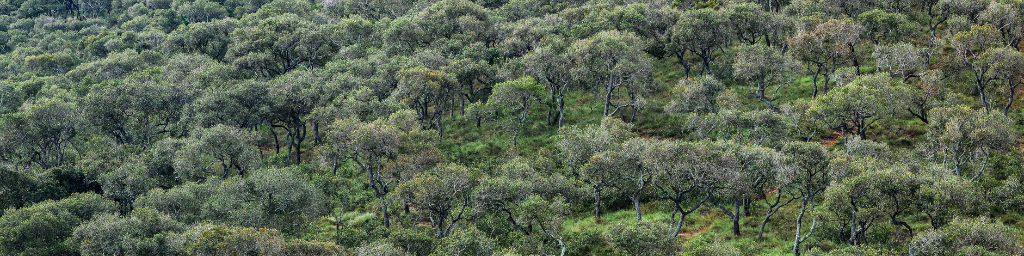
After three years of action in the Itasy region, Planète Urgence has officially launched the second phase of this project dedicated to the preservation of Tapia forests, an endemic ecosystem of Madagascar’s Highlands that is both fragile, valuable, and essential to local communities.
This new phase, scheduled to run until 2028, has a clear objective: to strengthen the long-term management of these forests with VOI (Vondron’Olona Ifotony – local community-based organisations), while reducing the economic pressures on them. Because protecting biodiversity cannot be considered without taking into account the daily realities of the populations living in direct contact with these natural resources.
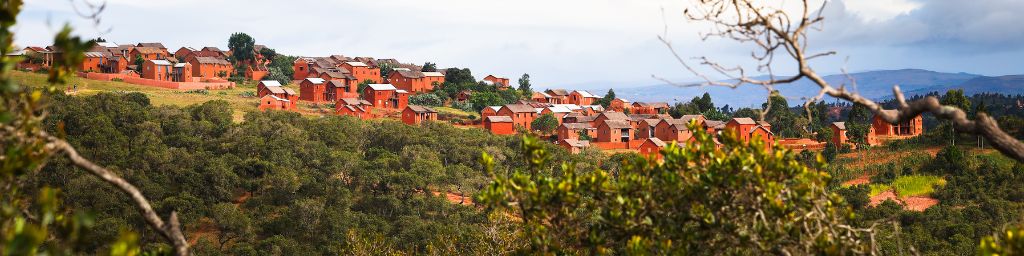
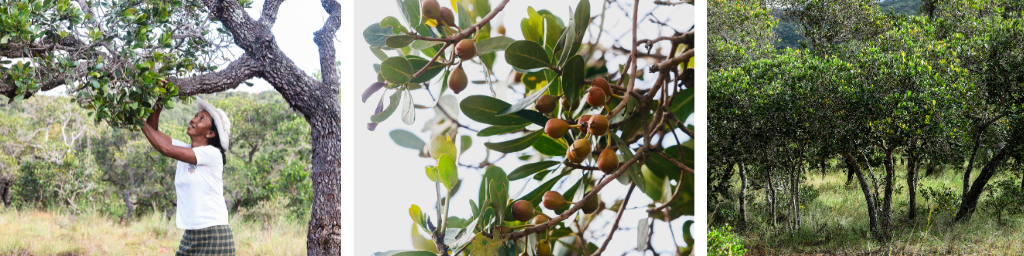
Despite their importance, Tapia forests remain under significant threat. In the Itasy region, where wooded areas cover only 2.2% of the territory, demand for wood and charcoal remains very high. Woodenergy is still the main source of household energy for a large share of families.
This energy pressure is compounded by significant economic vulnerability. In many rural municipalities, households depend directly on forest resource use to generate income or meet their immediate needs. When economic alternatives are limited, the forest becomes a means of survival.
Bushfires and certain agricultural practices, particularly slash-and-burn farming, also intensify forest degradation. Finally, although Madagascar has delegated the management of natural resources to VOI (Vondron’Olona Ifotony – local community-based organisations) since 2001, these structures often lack the technical, human, and financial resources needed to fully fulfil this role. It is precisely in this context that the TAPIA project was created.
Planète Urgence has been supporting communities in the Itasy region since 2010. Early activities mainly focused on reforestation in several fokontany (neighbourhoods) in the Arivonimamo district.
Gradually, the approach broadened. From 2015 onwards, village nurseries were established and complementary activities were developed, including beekeeping, market gardening, and sericulture, in response to locally expressed needs.
In 2021, the intervention took on a new scale, supporting nearly forty VOI and covering more than 3,000 hectares of Tapia forests.
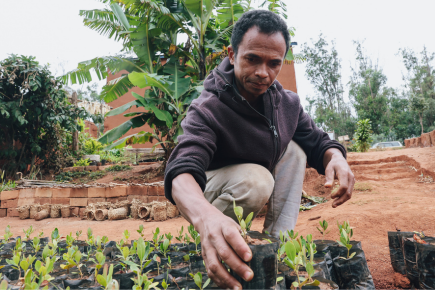
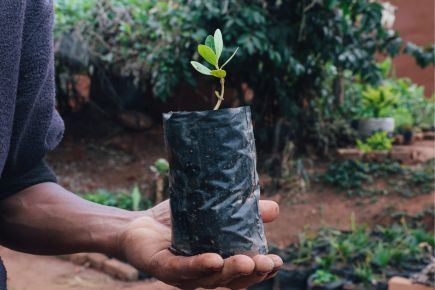
The project also worked across the entire fuelwood value chain: establishing dedicated plantations, improving carbonisation techniques to reduce losses, and distributing improved cookstoves to lower household charcoal consumption.
At the same time, a major institutional milestone was achieved with the temporary protection of two Community Protected Areas covering nearly 16,396 hectares.
The second phase of the project, running until the end of 2028, now focuses on two Community Protected Areas located in Arivonimamo and Miarinarivo.
The ambition is no longer limited to restoration, but to building a sustainable, replicable model driven locally. In the Arivonimamo protected area, 10,371 hectares are concerned. In Miarinarivo, the area covers 6,025 hectares.
One of the first objectives is to continue forest restoration efforts with an additional 300 hectares, while improving the management of wood energy plantations. This new phase also includes training 2,200 tree planters, strengthening charcoal producers’ skills in improved carbonisation techniques, and supporting 1,000 households in the use of improved cookstoves.
But the major innovation also lies in scientific research.
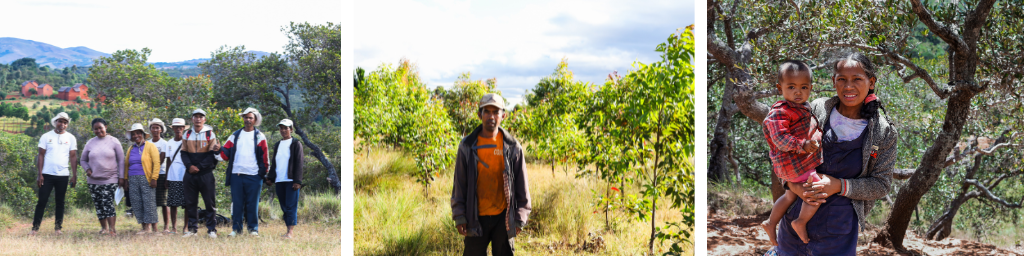
With the support of the IRD, the project is launching an innovative experimental setup to better understand the natural regeneration mechanisms of Tapia.
Across 900 m² of experimental sites, different techniques will be tested to assess under which conditions natural regeneration can be more effective than conventional planting.
This scientific focus is particularly strategic: it aims to guide future restoration methods on solid foundations, adapted to local ecological realities.
The success of this second phase also relies on consolidating local governance structures.
Five governance bodies will be strengthened to ensure the effective functioning of the Community Protected Areas. Local forest patrol officers, known as Polisinala, will also have their capacities reinforced, with 50 members trained.
In parallel, the project plans to update the regional Dina, the customary rules that locally regulate the use of natural resources. Thirty-one fokontany (neighbourhoods) will be involved in this awareness-raising and implementation process.
Protecting forests also means securing the incomes of rural households.
That is why TAPIA phase 2 significantly strengthens its agricultural component. Supported family farms will benefit from training in agroecology, assistance in water management, and improved access to agricultural services.
Rice-fish farming (rizipisciculture) – which combines rice cultivation with fish farming in rice paddies – will also be developed as a concrete way to improve household incomes.
The objective is ambitious: enabling up to 50% of supported family farms to increase their incomes.
The project also includes 100 hectares of agroforestry to produce both food resources and fuelwood. Finally, a study on ecotourism will help identify new funding opportunities for Community Protected Areas.
This new phase is made possible thanks to the renewed support of the Agence Française de Développement (AFD), the involvement of the TUI Care Foundation and Bouygues, as well as the commitment of numerous technical partners: the Itasy Region, DREDD, SAHA, FERT, APDRA, and IRD.
Beyond the project itself, TAPIA is part of a broader national dynamic. Madagascar has recently formalised the expansion of its protected areas by 1.82 million hectares, confirming the strategic importance given to conservation.
In this context, Tapia forests have become a true testing ground for participatory conservation, where local communities are at the heart of decision-making.
Protecting these areas is not only about safeguarding trees: it also means ensuring access to water, supporting food security, and strengthening people’s ability to face the challenges of climate change.